

Updated August 2026. This review was first published in 2021. I’ve updated film prices, availability, and where to buy and develop your film, and expanded the comparisons to Kodak Gold 200 and Kodak ColorPlus 200. All of the sample photos are still from my original rolls.
Some of the links below are affiliate links, which means we may earn a small commission if you buy through them, at no extra cost to you.
Kodak Ultramax 400 is a budget 400-speed film stock that is one of the best choices if you’re looking for a faster film at an affordable price. It features the classic warm, saturated vintage Kodak colors, high exposure latitude, and is very easy to use in a variety of light conditions.
Out of the budget Kodak films (Kodak Gold 200 and Kodak ColorPlus 200), I’d argue that Kodak Ultramax 400 is the best value, especially for beginners, because of its faster speed. Having a faster ISO of 400 makes it much easier to use in low-light situations like sunrise, sunset, and indoor photography, especially compared to the slower 200-speed stocks.
For this Kodak Ultramax 400 review, I loaded up my Nikon F3 and documented my daily life throughout a couple of days. Since my schedule usually revolves around our Shih Tzu, Sushi, you’ll see a lot of photos of her 🙂
As a heads up, this article is geared towards the beginner, but if you’re a seasoned film pro I think you’ll find some useful information in here too.
Kodak Ultramax 400 at a glance
If you just want the short version: Ultramax 400 is the budget Kodak film to grab when you need speed. It has the warm, saturated look I associate with Kodak’s consumer films, an extra stop of speed over Gold 200 and ColorPlus 200, and grain that becomes more noticeable in lower light. It costs a couple dollars more than Gold or ColorPlus, and the speed is what you’re paying for.
- Film type: Color negative (C-41 process)
- ISO (ASA): 400
- Formats: 35mm only
- Price: Around $11 to $13 per roll as of August 2026
- Best for: Changing light, cloudy PNW days, indoor shooting, and pets and kids that won’t sit still
Why It’s One of My Favorite Film Stocks

The main reason why I keep coming back to this film stock is because of its affordable price and the fact that it’s one of the only budget 400-speed film stocks.
At first glance, comparing a 400-speed film to a 200-speed film might not seem like a big difference, but in low-light situations this could be the difference between whether or not you’re able to execute the photo.
So, if you’re looking for a budget film stock with beautiful vintage colors that gives you the flexibility to shoot in a variety of light conditions, Kodak Ultramax 400 is a great choice.
PROS
- Faster 400 speed film makes it much more flexible to use in a variety of situations, especially compared to 200-speed film.
- Still affordable and widely available. Add in the 400 speed and you have one of the best budget film stocks you can buy.
- Classic warm saturated vintage colors that you expect from Kodak.
- Has good exposure latitude, meaning it deals well with underexposure and overexposure.
CONS
- Because it’s a faster film, it also has coarser grain, which might not fit everyone’s style.
- It’s usually a couple of dollars more per roll than the other budget Kodak film stocks. As of August 2026, expect around $11 to $13 for a 36-exposure roll, versus roughly $8 to $10 for Gold 200 or ColorPlus 200.
- It is a warmer, punchier film stock. If you prefer a softer, more muted palette, Kodak ColorPlus 200 is the better fit among the budget Kodak options.
Kodak Ultramax 400 Features
Colors

Like all Kodak film stocks, Kodak Ultramax 400 features a classic, warm, saturated vintage vibe.
It has a very similar look and feel to Kodak Gold 200, which means you’re getting a film stock with lots of saturation in all colors and high contrast, especially on bright sunny days. This makes Ultramax a great film to use for landscapes, especially during the golden hours of sunrise and sunset.
It’s a good film for portrait work too, but out of the budget Kodak film stocks I’d rather go with Kodak ColorPlus 200 for portraits because of its flatter, slightly less saturated color profile.
Kodak Ultramax 400 performs best at its box speed of 400 and loves bright light. In good sunlight, the film accentuates the warm tones in the image just like Kodak Gold 200. I’ve heard from some people that they’ve experienced color shifts when they under or overexpose, but I haven’t run into that issue.
Here are a couple of photo examples that I think will give you a good idea of what the colors of Kodak Ultramax 400 look like and its exposure latitude.
Example Image #1

In this image, Sushi is sleeping on our bed and there is a stream of natural light flowing in from the window illuminating her face. Other than the ray of light hitting Sushi, the rest of the room is pretty dark, which is why most of the image is in the shadows.
The parts of the image that are in the light have a nice warm saturated glow to them. This result is expected because Kodak film is known for its warm undertone.
What’s notable about this photo is how the film performed with the shadows. If you look closely (especially on the right side of the image), you can see how much detail was captured and how you’re still able to see Sushi’s body. This is the kind of situation where I appreciate having the extra stop of speed over a 200-speed film stock.
Example Image #2

This image was taken on the shores of Lake Washington close to sunset. I wanted to use this photo as an example because I think it gives you a good idea of how the film renders sunlight, shadows, and blues and greens in a natural environment.
As you can see, all the highlights in the image give off a warm vintage glow. This is most apparent around the leaves of the tree on the right side of the image.
There is obvious high contrast between the highlights and shadows, but what’s nice to see is that there is still a good amount of shadow detail being kept (similar to image #1).
The blues of the lake and the greens of the grass and tree are rendered very nicely too. Although it’s a more saturated look, the saturation of the blues and greens is subtle enough that it’s not overpowering.
Film Speed

Kodak Ultramax 400 is a 400-speed film stock, which is its biggest advantage compared to the other budget Kodak film stocks, which are 200 speed.
At ISO 400, it’s still easiest to use on bright sunny days, but what’s nice is that it’s fast enough to use on cloudy days and in low light if you need to.
Additionally, the higher film speed makes it much easier to use faster shutter speeds in different light conditions, which is useful if you want to take photos of pets and kids who are always moving around.
Indoor photography with Kodak Ultramax 400 is easier to execute too. For the best performance, you’ll still want a good amount of natural light flowing in from the windows. However, if you don’t have natural light, you can always use a wider aperture and a slower shutter speed.
By the way, if you’re deciding what to load in a specific camera, we also have guides to the best film for the Pentax K1000 and the best film for the Canon AE-1.
Latitude of Film Stock

In my experience, Kodak Ultramax 400 has been forgiving when the exposure isn’t perfect, which is one of the reasons I like it for everyday shooting.
The reason this is important is that the more exposure latitude a film stock has, the more you can underexpose or overexpose an image while still getting good results.
That flexibility is especially useful in high-contrast scenes where you’re trying to hold useful detail across both brighter and darker parts of the frame.
One thing to keep in mind is that, like other film stocks, Kodak Ultramax 400 performs better overexposed than underexposed. As I mentioned before, I’ve heard from some people that they’ve experienced color shifts when this film is under or overexposed, but I’ve yet to have this problem.
I’ve had good results giving Ultramax extra exposure, but I wouldn’t count on a fixed number of stops in every situation. I try to avoid significant underexposure because that’s where muddy shadows and more noticeable grain can become a problem.
If you underexpose the image too much, you risk muddling the shadows and introducing grain into the image, since it has coarser grain.
Beginner’s Note: “Latitude” means how well the film stock performs when it’s under or overexposed. If a film stock has high latitude, it performs well throughout a wide range from underexposure to overexposure. If it has low latitude, it only performs well in a narrow exposure window.
Grain

Since Kodak Ultramax 400 is a faster film, it has coarser and larger grain. The larger grain size is more sensitive to light, which is what gives the film its higher speed and ISO (ASA) rating.
The grain is most visible in images taken in low light, but it’s not a deal-breaker. In fact, I think the grain of Kodak Ultramax 400 is one of its distinctive characteristics.
For example, this image was taken at blue hour, right after the sun had set and the moon came out. You can see noticeable grain in the image, but it doesn’t make the image unusable or “bad” by any standard.
This is one of the trade-offs between low speed (low ISO) and higher speed (higher ISO) film stocks. In general, the lower the ISO, the finer the grain. The higher the ISO, the coarser/larger the grain.
With that said, if you don’t like the look of coarser grain, you can go with the professional Kodak Portra 400. Although Portra 400 is also 400 speed, it has much finer grain. Just know that the price gap has grown a lot: as of August 2026, Portra runs roughly $17 to $20+ per roll versus $11 to $13 for Ultramax.
How to Meter for Kodak Ultramax 400

TL;DR – Meter at box speed of 400 for best results, but err on the side of overexposure when you have to. If you have to overexpose the image, don’t worry, as the film can handle it very well.
After shooting through and developing a few rolls, I’ve found Ultramax 400 easiest to use at box speed or with a little extra exposure. I usually start by metering at ISO (ASA) 400 and err toward giving the film more light rather than less.
The film handles overexposure very well, but like many film stocks it doesn’t perform the best when underexposed.
Since the film performs better overexposed, the best way to make sure you’ve exposed your image properly is to meter and expose for the shadows and mid-tones. Most of the time when you meter for shadows, your highlights will be overexposed, but that’s ok.
For example, in this image I set the camera ASA to 400. Then I used the internal light meter of the Nikon F3 to meter and expose for the shadows by the river in the bottom left corner of the image.
By doing this, I was able to make sure the shadows were properly exposed while being confident that Kodak Ultramax 400 could handle the overexposed highlights in the sky.
Beginner’s Note: If you don’t have a light meter or your camera doesn’t have one, a quick way to meter for light is a phone light meter app like this one. I’ve used it with good results, although I still prefer a dedicated Sekonic light meter when I have one with me.
Kodak Ultramax 400 vs Kodak Gold 200

Kodak Gold 200 is a classic 200-speed Kodak film stock with rich, warm, vintage colors that is very similar to Kodak Ultramax 400. The color profiles are close enough that the real decision is speed.
If you’re looking for the same look as Ultramax but don’t necessarily need the extra speed, Gold is a good choice, and as of August 2026 it’s a bit cheaper too, around $9 per roll versus $11 to $13 for Ultramax. If your shooting includes shade, cloudy days, indoors, or anything that moves, the extra stop of speed is worth the couple of dollars.
If you want a more detailed look into my experience with this film stock, make sure to check out my Kodak Gold 200 review too.
- ISO (ASA): 200
- Best Shot At: Slightly overexposed. Try shooting it metered at 100 to 160 ISO.
Kodak Ultramax 400 vs Kodak ColorPlus 200

If you like the warmth of Kodak film but want something with a flatter, less saturated look, Kodak ColorPlus 200 might be a good choice. Similar to Ultramax, ColorPlus is a budget-friendly film stock with flexible exposure latitude that’s always great to have in your bag.
The trade is the same as with Gold: ColorPlus is a 200-speed film, so it wants more light, but it’s softer and more muted, which is why it’s my pick among the budget stocks for portraits. It’s also slightly cheaper, usually around $8 to $10 per roll as of August 2026.
You can see my sample photos and full thoughts in my Kodak ColorPlus 200 review.
- ISO (ASA): 200
- Best Shot At: Slightly overexposed. Try metering it at 100 ISO.
Where to Develop Your Film
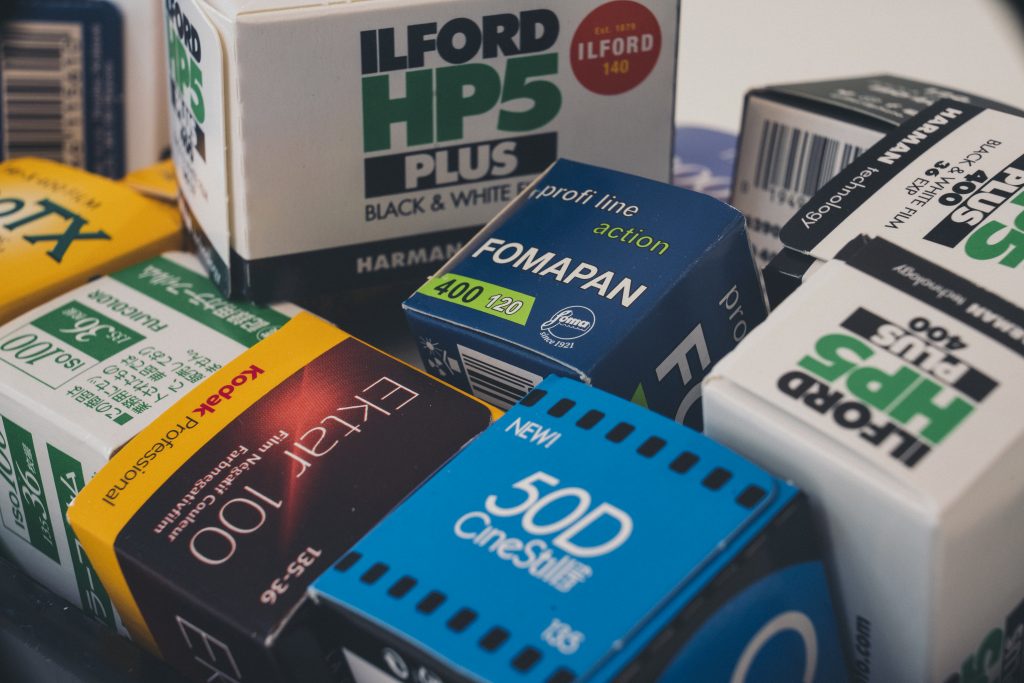
For newbies, having a professional lab develop and scan your photos is the best way to start. You’ll save time, get consistent results, and you’ll get to figure out if you want to continue with film photography before investing in development equipment.
The downside is the cost, and developing prices have climbed a lot since I first wrote this review. If you don’t have a professional lab in your area, here are a few of my favorites that take mail-in orders, with their prices as of August 2026:
- The Shot on Film Store in Seattle: $19.90 per roll for color develop and scan, $23.90 for hand-developed black and white. They’re my favorite local lab and always very helpful if you have questions, so give them a call if you want to talk through film stocks.
- The Darkroom in Southern California: develop and scan starting around $14 per roll, with flat-rate round-trip shipping.
- Blue Moon Camera in Portland: $27 per roll for color develop and scan, $30.75 for black and white.
All in, expect a roll of Ultramax to cost around $30 by the time it’s bought, developed, and scanned. It’s not the cheap hobby it was when I started, which is exactly why the budget stocks still earn their spot in my bag.
Where to Buy Film

Ultramax is still easy to find in 2026. I’d stick with established photo retailers or a local camera store whenever you can:
- Amazon: Convenient shipping and easy returns, and often the fastest option if you’re a Prime member. Just check that the listing is fresh, in-date film from a reputable seller.
- Freestyle Photographic Supply: A huge supply of different film stocks at a great price.
- Adorama: Free shipping options are available. Another good choice for a wide selection of film stock at a fair price.
- B&H Photo: Another place to find a wide selection of film at reasonable prices, with free expedited shipping on orders over $49.
- The Shot on Film Store: An awesome film store in the Seattle area with a large selection, and you can pair your film order with their developing.
Be more careful with marketplace sellers on sites like eBay, especially when a listing doesn’t clearly show the expiration date or how the film was stored. Expired film can be fun to experiment with, but it shouldn’t be what you get when you thought you were buying fresh stock.
Kodak Ultramax 400 FAQ
Is Kodak Ultramax 400 good?
Yes. For the price, it’s one of the best all-around color films you can buy. You get the classic warm Kodak look, strong exposure latitude, and enough speed to shoot in changing light. The grain is coarser than a professional stock like Portra 400, but that’s part of its character rather than a flaw.
Can you overexpose Kodak Ultramax 400?
Yes, and it handles it very well. In my experience you can easily overexpose it by 2 or 3 stops and still get great results. Underexposure is where it struggles, so when in doubt, meter for the shadows and let the highlights go bright. I meter it at box speed 400 and lean toward overexposure when the light is tricky.
Is Kodak Ultramax 400 good for indoor or night photography?
It’s the most usable of the budget Kodak stocks in low light. Indoors, it works well with decent window light, or with a wider aperture and slower shutter speed. At night you’ll see more of its grain, like in my blue hour moon photo above, but the results are still very usable. If you shoot a lot of low light and want finer grain, that’s when stepping up to Portra 400 makes sense.
Who’s Kodak Ultramax 400 For and Conclusion

Overall, Kodak Ultramax 400 is one of the best value budget film stocks. It’s easy to use, produces beautiful colors, and is 400-speed, so you have more flexibility to use it in a variety of lighting conditions.
The biggest downside is that its color profile is on the saturated and contrasty side of the spectrum, which might not fit everyone’s style. If you like the warmth of Kodak films but want something with less punch, Kodak ColorPlus 200 might be the better fit.
Also keep in mind that Kodak Ultramax 400 is still a budget film stock. If you’re a professional photographer or are looking to do more serious work, you might be better off spending the extra money for Kodak Portra 400.
Have you shot Ultramax? I’d love to hear how you like it in the comments.